
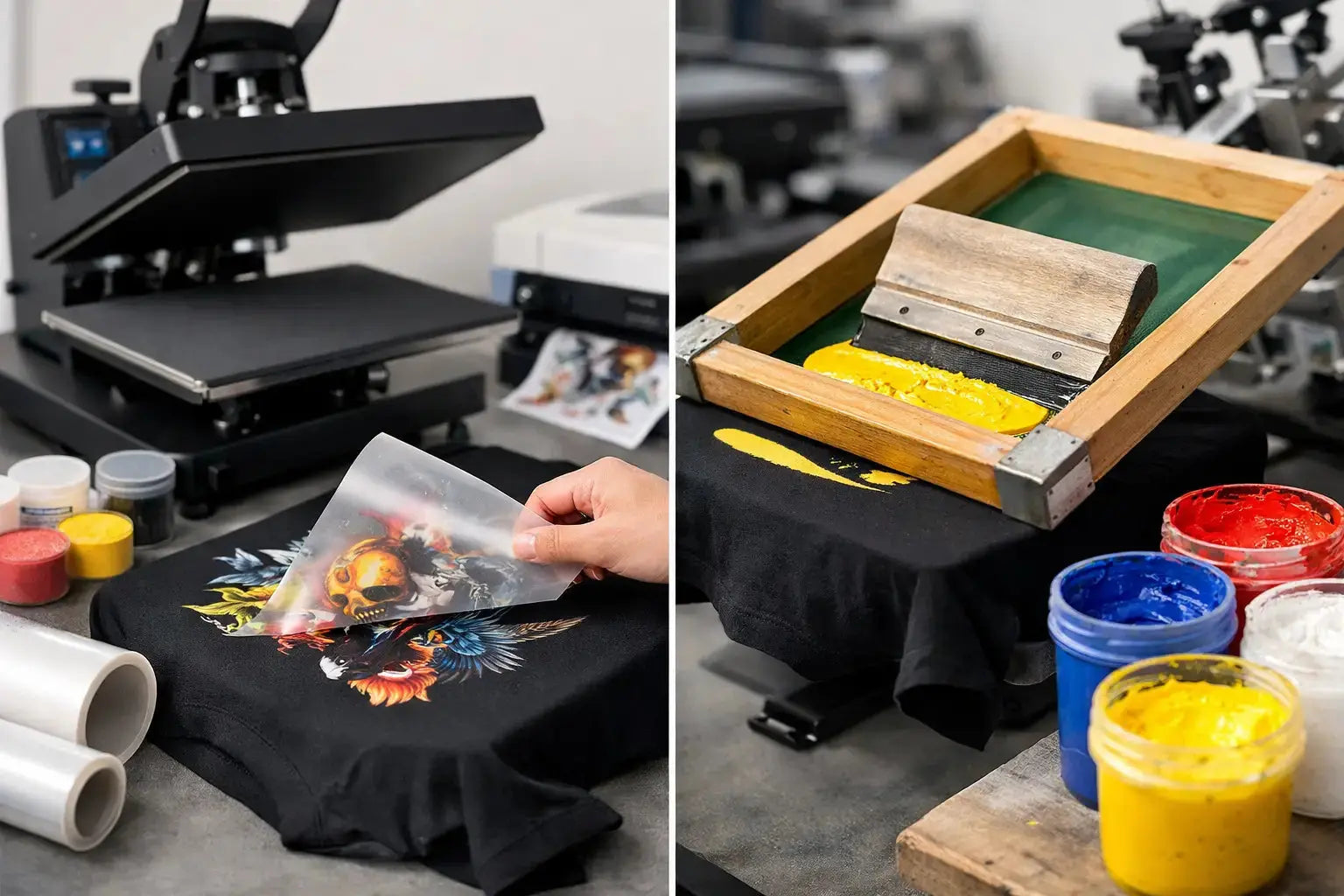
When a team needs branded uniforms by next week or an event requires promotional shirts in multiple designs, the choice between DTF printing vs screen printing quickly becomes a business decision, not just a production detail. The right method affects cost, color accuracy, order flexibility, and how the finished garment performs after repeated use. For procurement teams, marketers, and business owners, the question is simple: which option fits the job best?
The short answer is that it depends on quantity, artwork, fabric, and deadline. Screen printing remains a strong choice for larger runs with simple, repeatable designs. DTF printing is often the better fit when you need full-color artwork, smaller quantities, or more flexibility across garment types.
DTF printing vs screen printing at a glance
Screen printing applies ink directly onto fabric through a mesh screen. Each color usually requires its own screen, which makes setup more involved but highly efficient once production is underway. This is why screen printing has long been the standard for bulk branded apparel and promotional wear.
DTF, or direct-to-film printing, works differently. The design is printed onto a special film, treated with adhesive powder, then heat transferred onto the garment. This process handles detailed graphics and complex color blends well, without the same screen setup requirements.
For businesses ordering uniforms, campaign apparel, staff shirts, retail merchandise, or event giveaways, both methods can deliver professional results. The better option comes down to the commercial priorities behind the order.
When screen printing makes more sense
Screen printing is often the strongest value when you are producing higher volumes of the same design. If your company needs a large run of branded T-shirts for a product launch, internal campaign, school event, restaurant staff, or delivery team, screen printing can be very cost-effective over quantity.
It also performs well with bold, solid-color artwork. Logos, text, and simple graphic layouts tend to print cleanly and consistently. Many businesses choose screen printing for uniforms because it creates a polished, dependable finish that works well for repeated branding across teams and locations.
Another advantage is ink laydown. In many use cases, screen printing gives a strong, vibrant result on the right garment, especially for straightforward designs that do not require photographic detail. If your artwork uses one to three colors and your order quantity is substantial, screen printing is usually worth serious consideration.
That said, setup is part of the equation. Because each color requires preparation, screen printing is not always the most efficient choice for short runs, last-minute quantity changes, or jobs with many design variations.
Best business use cases for screen printing
Screen printing is typically a strong fit for staff uniforms, company event apparel, promotional giveaways in bulk, branded T-shirts for retail resale, and campaigns where one design needs to be repeated at scale. It is especially practical when consistency matters more than design flexibility.
When DTF printing is the better option
DTF printing is built for flexibility. If your artwork includes gradients, small details, photo-style graphics, or multiple colors, DTF can reproduce that complexity without the additional setup that screen printing often requires.
This makes it a useful option for businesses that need smaller quantities, multiple artwork versions, or mixed garment orders. For example, if a company needs 20 shirts in different sizes, several names added to each garment, or a short-run promotional collection with full-color branding, DTF is often the more practical production route.
DTF also helps when you want to keep options open. A marketing team may need test runs before a larger campaign. A startup may want branded apparel without committing to high-volume production. An event organizer may need different graphics for sponsors, staff, and support crews. In these cases, DTF supports speed and adaptability.
Another commercial benefit is fabric versatility. DTF can work well across a wider range of apparel types, which can help when a project includes varied garments rather than one standard shirt style.
Best business use cases for DTF printing
DTF is well suited to small-batch branded apparel, event shirts with multiple versions, uniforms with personalized names or departments, promotional drops with detailed artwork, and startup merch programs where order flexibility matters.
Cost differences: setup vs unit economics
For most buyers, price is not just about the final invoice. It is about how the print method behaves across different order sizes.
Screen printing usually has higher setup involvement but lower per-unit cost as quantities increase. That means the economics improve when you are ordering larger runs of the same design. If you are printing 200 shirts with a simple logo, screen printing can be a very efficient choice.
DTF printing usually reduces setup complexity, which makes it more economical for shorter runs or more customized orders. If you only need 20 to 50 pieces, or if each garment includes different names, graphics, or design placements, DTF often avoids the setup costs that make screen printing less practical at low volumes.
This is where many businesses make the wrong comparison. They compare one shirt to one shirt. In reality, the smarter comparison is order structure to order structure. Quantity, design complexity, number of colors, and garment variety all change the cost picture.
Design quality and visual impact
If your brand artwork is simple and bold, both methods can look excellent. The difference becomes clearer when the design is detailed.
Screen printing is highly effective for clean, strong graphics. Corporate logos, event branding, and simple statement designs tend to reproduce very well. It has long been trusted for consistent visual identity across large runs.
DTF printing has the edge when artwork includes fine lines, gradients, layered colors, or image-based graphics. It offers more freedom for creative teams that want to preserve detail without simplifying the design for production.
For businesses running promotions, sponsor-backed events, or branded merchandise campaigns, this matters. If the apparel is part of the marketing asset itself, not just a uniform, the print method should support the visual standard your brand requires.
Durability, feel, and wear performance
Durability depends on proper production, the garment itself, and how the apparel is used. Both DTF and screen printing can produce reliable business-ready results when handled correctly, but they do not feel exactly the same on fabric.
Screen printing is often preferred for classic branded apparel with a familiar finish, particularly on larger runs of standard garments. It is a dependable choice for workwear, promotional shirts, and uniforms that need a consistent look across teams.
DTF printing creates a transferred print layer, which can be ideal for complex graphics and varied garment applications. For many branded apparel projects, especially short-run or detail-heavy work, that trade-off is worthwhile.
If wear conditions are demanding, such as frequent washing, outdoor events, or operational uniforms, it makes sense to review the garment type, usage pattern, and artwork before choosing the print method. The right recommendation should come from the actual application, not a one-size-fits-all rule.
How to choose between DTF printing vs screen printing
If your order is high volume, your design is simple, and cost efficiency at scale is the goal, screen printing is usually the stronger choice. It is built for repeatability and works especially well for company-wide apparel programs.
If your design is detailed, your quantity is lower, or you need flexibility across artwork versions and garment types, DTF printing is often the smarter route. It supports fast-moving campaigns and shorter production decisions without forcing unnecessary volume.
For many businesses, the real decision is not which method is better overall. It is which method matches the project. A restaurant launching staff uniforms may choose screen printing for core items. The same business may use DTF for a limited seasonal promotion or event-specific shirts. Different jobs call for different production logic.
Getting the right result for your order
The most efficient apparel projects start with clear specs: garment type, quantity, artwork, number of print locations, and intended use. Once those details are defined, choosing between DTF printing vs screen printing becomes much easier and far more accurate.
At Printava, business clients often need more than a print method. They need guidance that aligns branding, budget, and delivery expectations without slowing down the order process. If you are planning uniforms, event apparel, or promotional merchandise, get a quote today and choose the method that fits the job from the start.