
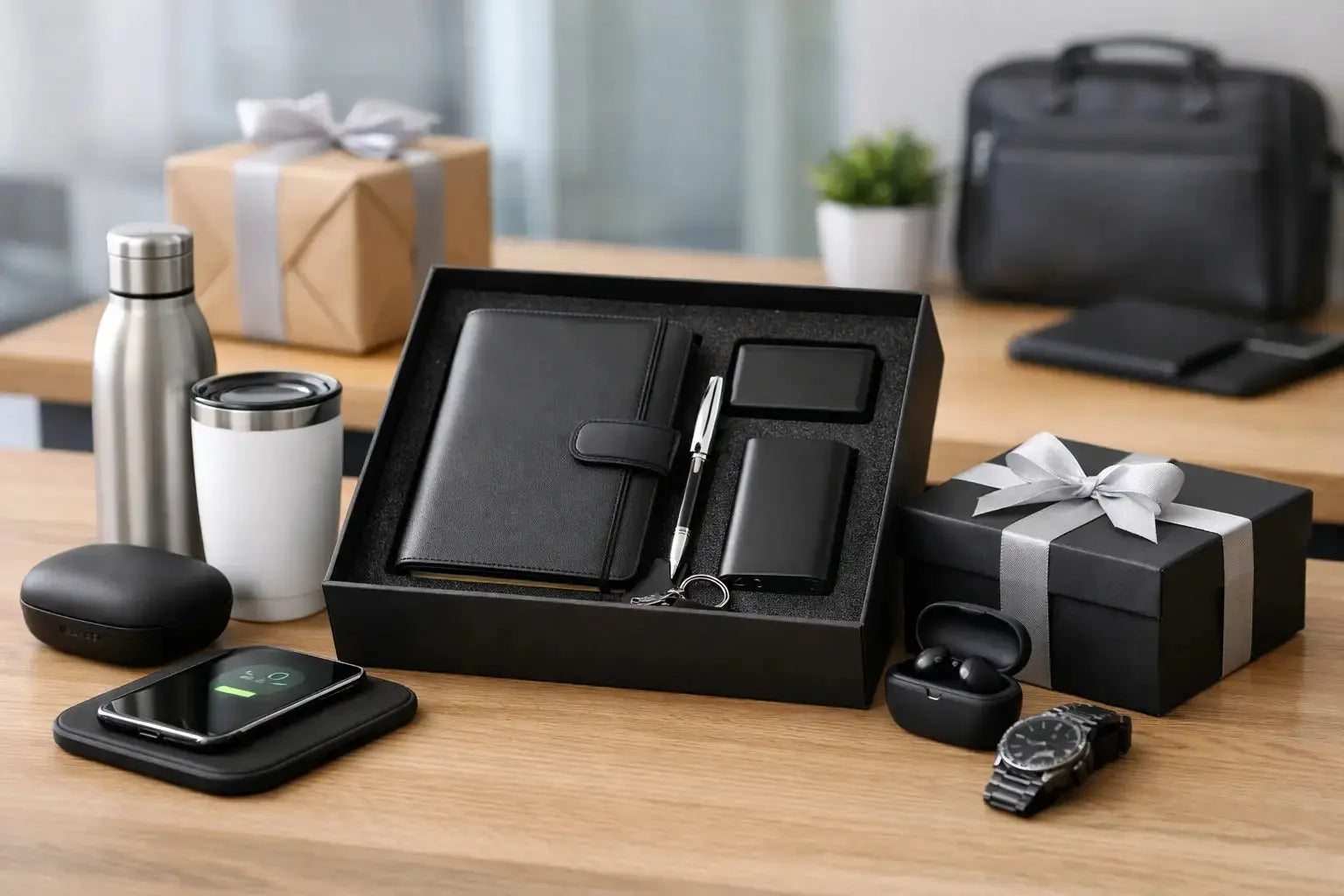
A missed event deadline, inconsistent branding across gift items, or a last-minute scramble for client giveaways usually points to the same issue - gifting is being handled one order at a time. A wholesale corporate gifts program gives businesses a more controlled way to source, brand, store, and distribute promotional products at scale without repeating the same procurement process for every campaign.
For marketing teams, HR departments, procurement managers, and event organizers, that matters. Corporate gifting is rarely just about the item itself. It supports brand visibility, client retention, employee onboarding, seasonal campaigns, exhibitions, and internal culture. When the process is fragmented, quality and timing suffer. When the process is structured, gifting becomes easier to plan and easier to execute.
What a wholesale corporate gifts program actually includes
A wholesale corporate gifts program is not simply bulk buying. It is a repeatable supply model built around your brand, your budget range, and your usage patterns. Instead of sourcing mugs one month, notebooks the next, and tech accessories from a different supplier later, the program consolidates product selection and branding standards under one managed process.
In practical terms, that usually includes shortlisted gift categories, approved branding methods, volume-based ordering, and a clear plan for fulfillment. Some businesses also need packaging, inserts, event-specific customization, or distribution by location. Others need ready stock for quick campaigns while keeping the option for custom-made items when the brief is more specific.
The value is consistency. Your logo size, print quality, packaging presentation, and product standards do not need to be redefined every time someone requests a gift order.
Why companies move to a wholesale corporate gifts program
Most businesses do not start with a formal gifting program. They start with occasional requests. A sales team needs branded pens for meetings. HR needs welcome kits. Marketing needs premium gifts for a trade show. Management wants year-end gifting for clients. Over time, these separate orders become expensive to manage because each one requires new approvals, new sourcing, and new production timelines.
A wholesale corporate gifts program reduces that friction. It gives teams a pre-approved path. Products have already been selected or at least narrowed down. Branding methods have already been evaluated. The supplier already understands your visual standards and expected service level.
There is also a cost advantage, but it should be understood correctly. Wholesale pricing helps, especially when quantities are planned in advance, but the bigger benefit is operational efficiency. Fewer rush decisions often mean better product choices, more stable lead times, and less waste from ordering the wrong items.
The products that usually make sense in bulk
Not every corporate gift should be ordered in high volume. The best candidates are items with broad use across departments and campaigns. Think notebooks, pens, tumblers, bottles, desk accessories, tote bags, lanyards, power banks, USB drives, and welcome kit essentials. These products work because they can serve multiple purposes without feeling too campaign-specific.
Premium gifts can also be part of the program, but usually in a different tier. For example, executive gifts, seasonal gift sets, or custom packaging may require lower-volume planning with more detailed approval steps. That does not reduce their value. It just means they should be managed differently from your everyday promotional inventory.
The right product mix depends on audience and usage. A startup building employer brand visibility may prioritize onboarding kits and event giveaways. A retailer may need seasonal promotional items in volume. A B2B company with regular client meetings may place more value on durable desk products and premium stationery. There is no single best product list. The strongest programs are matched to actual business use.
Choosing products for brand fit, not just price
Low unit cost can be attractive, especially for large quantities, but a gift that feels disposable rarely supports a professional brand image. That does not mean every item must be premium. It means the product should reflect the impression your company wants to create.
Material, finish, durability, and print method all affect that outcome. A matte metal bottle communicates something different from a lightweight plastic item. A clean screen print works well for some products, while engraving or UV printing may be more suitable for others. Packaging also matters more than many buyers expect, especially for executive gifting, onboarding, and event handouts where first impression plays a direct role.
This is where working with an experienced supplier becomes useful. Product selection should account for budget, but also for print area, branding visibility, target audience, and expected shelf life. A cheaper item that fails to represent the brand well is not always the better buy.
How to set up a wholesale corporate gifts program
The most effective setup starts with usage planning. Before discussing products, define where the gifts will be used. Are they for exhibitions, sales meetings, employee kits, festive campaigns, VIP clients, or retail promotions? Once that is clear, product categories become easier to organize.
Next, establish quantity expectations. Some businesses know their quarterly volumes. Others only know approximate annual demand. Either is workable, but better forecasts usually lead to better pricing and smoother production scheduling.
Then standardize the branding rules. Decide which logo versions are approved, what print positions are acceptable, what packaging level is required, and which products are reserved for premium use. This reduces unnecessary back-and-forth during future orders.
A good supplier will usually help build this structure into a practical ordering system. That may include approved product options, sample review, branded mockups, and guidance on the right print method for each item. For businesses operating across multiple campaigns or departments, this structure can save significant time.
Managing stock, lead times, and replenishment
A gifting program works best when it balances readiness with flexibility. If every item is ordered only when needed, you risk delays. If too much stock is held without a plan, capital gets tied up in products that may become outdated or underused.
The answer is usually a mixed model. Core items with consistent demand can be stocked or reordered on a planned cycle. Campaign-specific or premium items can be produced against approved briefs. This gives businesses access to fast-moving branded products without overcommitting to every category.
Lead time planning is also important because branding methods vary. Screen printing, embroidery, laser engraving, UV printing, and custom packaging each come with different production considerations. A supplier should be clear about what can be delivered quickly from ready stock and what needs more scheduling because of customization complexity.
For companies in Dubai and across the UAE, this becomes especially relevant during exhibition seasons, holiday campaigns, and year-end gifting periods when demand can rise sharply. Early planning protects quality and availability.
What to look for in a supplier
The success of a wholesale corporate gifts program depends as much on execution as product selection. A supplier should be able to support sourcing, branding, proofing, production, and delivery without making the buyer manage every step manually.
Reliability matters more than broad catalogs alone. You need clear communication, accurate branding application, practical product advice, and a team that can handle both standard bulk items and more customized requests when needed. Sample quality, response speed, and consistency across repeat orders are strong indicators of whether the partnership will scale well.
It also helps if the supplier can support related requirements such as packaging, inserts, labels, or branded printed materials for kits and events. That kind of coordination reduces vendor fragmentation and helps maintain presentation standards.
Printava works with businesses that need this kind of organized support - from ready-made branded items to custom corporate gifting requirements that need careful execution and dependable turnaround.
Common mistakes to avoid
One common mistake is choosing products before defining the use case. Another is approving items based only on a digital image without checking branding suitability, finish, or practicality. A notebook may look good in a mockup but feel underwhelming if the cover material or print quality does not match the brand standard.
Another issue is over-customizing everyday items. If every product requires a unique insert, packaging format, or event-specific design, reordering becomes harder and more expensive. Customization should be used where it adds value, not where it complicates repeat procurement.
Finally, do not treat all recipients the same. Staff welcome kits, exhibition giveaways, channel partner gifts, and executive client sets should not always come from the same budget or product tier. Segmenting the program usually leads to better results than applying one gifting standard across every audience.
A well-run gifting program should make future orders simpler, not more complicated. If the process still feels reactive every time a request comes in, the structure likely needs adjustment.
The best time to build a wholesale program is before your next event calendar fills up. With the right products, clear approval standards, and a supplier who can execute consistently, corporate gifting becomes one less operational problem and one more tool your business can use with confidence. Get a quote today and build a program that is ready when your team needs it.