
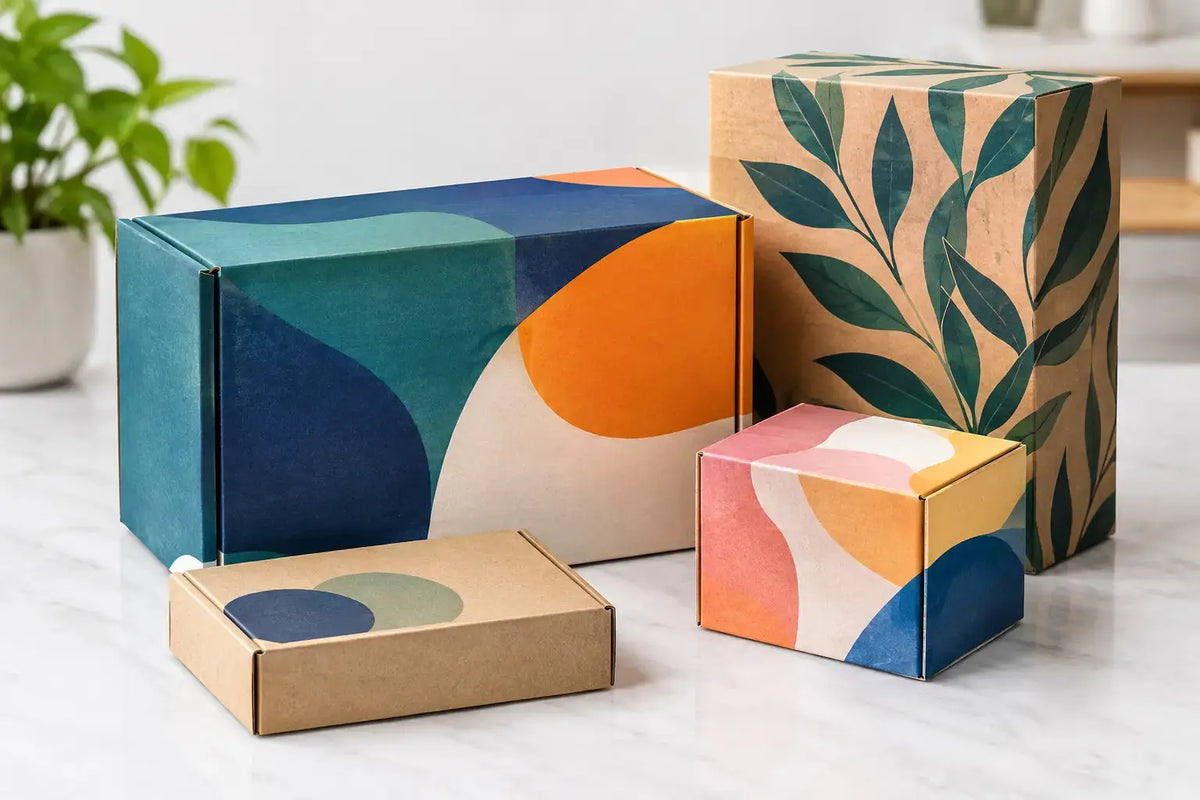
A box is often the first physical thing a customer sees, carries, photographs, or opens after choosing your business. Effective box printing turns that practical container into a brand asset - one that supports recognition, protects the product, and gives every order or retail display a more considered finish.
For restaurants, retailers, event teams, and growing businesses, the right printed box does more than display a logo. It can clarify what is inside, communicate handling instructions, support a campaign, and create consistency across packaging, labels, inserts, and promotional materials. The best choice depends on how the box will be used, what it needs to carry, and how your brand needs to be seen.
Start With the Job the Box Must Do
Before selecting colors or finishes, define the box's role. A lightweight bakery box, a retail gift box, a delivery carton, and a presentation box for corporate merchandise may all carry branding, but their requirements are very different.
Product weight, dimensions, stacking conditions, storage time, and whether the item is food-related all affect the material and structure. A box used for takeaway service may need a practical closure and space for handling information. A retail product box may need a shelf-ready shape and precise color reproduction. A corporate gift box may prioritize presentation, inserts, and a premium opening experience.
This is where early planning prevents expensive adjustments later. Confirm the product dimensions, including any inner wrapping, before finalizing the dieline. Allow for easy packing and opening, but avoid excess empty space that can make a product feel less secure or increase delivery volume.
Choose a Structure That Supports Use
Common formats include folding cartons, tuck-top boxes, mailer boxes, sleeve-and-tray boxes, rigid boxes, and corrugated shipping cartons. Each has a place in business packaging.
Folding cartons are practical for many retail goods because they store flat before assembly. Mailer boxes work well for e-commerce orders, sample kits, and promotional packs because they provide a self-contained unboxing format. Corrugated cartons are often selected when protection during transport is the priority. Rigid boxes offer a more substantial presentation for premium gifts, sets, and launch items, though they require more storage space and are not always the most efficient choice for high-volume fulfillment.
The right structure is not necessarily the most elaborate one. A straightforward box that packs quickly, arrives in good condition, and presents your branding clearly may deliver stronger day-to-day value than a complex design that slows operations.
Box Printing Materials and Finishes That Fit the Brief
Material selection shapes both the appearance and performance of printed packaging. Paperboard is commonly used for lightweight retail and food-related applications, while corrugated board adds strength for shipping and bulkier products. Rigid board is often wrapped with printed paper to create a more formal presentation box.
The exterior finish should match the setting in which the box will be used. Matte lamination provides a refined, low-glare surface that suits premium branding and detailed designs. Gloss lamination can make colors appear more vivid and is useful when visual impact is a priority. Uncoated stocks can give a natural, understated look, especially for brands with an organic or craft-focused identity, although they may respond differently to handling and moisture.
Special finishing can add emphasis without overwhelming the design. Spot UV can highlight a logo or pattern, while foil stamping can create a distinctive focal point for selected premium applications. Embossing and debossing add texture, but they work best when the box material and design allow the detail to remain clear. These features should serve the brand, not compete with the product information.
A practical approach is to reserve premium finishes for customer-facing boxes, gift packaging, or campaign pieces, while using durable, efficient specifications for shipping cartons and high-volume operational packaging.
Designing Box Printing for Real Business Use
A box has multiple panels, folds, edges, and closure points. Design must account for all of them. Artwork that looks balanced on a flat screen can shift in visual weight once the box is assembled, particularly when a logo crosses a fold or key text sits near a crease.
Keep the front-facing panel focused. In many cases, a logo, product name, and one clear visual element are enough. Use side and back panels for required information, contact details, product instructions, social media handles, or campaign messaging. This hierarchy helps customers find what they need without making the packaging feel crowded.
Color management deserves close attention. Brand colors should be specified consistently, particularly when packaging must align with signage, labels, uniforms, brochures, or exhibition materials. If the box is part of a broader launch, provide the same approved artwork and color references across every item to reduce variation.
For designs with small text, fine lines, metallic effects, or large areas of solid color, request a proof or production sample where appropriate. It gives stakeholders a chance to assess readability, color balance, and placement before committing to the full order.
Include Information Without Losing the Brand
Printed boxes often need to carry more than branding. Depending on the product and application, you may need ingredients, handling instructions, size details, SKU information, batch references, barcodes, QR codes, or contact details.
Give this operational information a dedicated area. A clean information panel keeps the primary brand face uncluttered and makes updates easier when product details change. For businesses managing multiple products or seasonal ranges, a base box design with variable labels or sleeves can also be more flexible than producing a completely different box for every variation.
Selecting the Right Print Method and Quantity
Print quantity affects the most suitable production method, unit cost, setup requirements, and flexibility. Shorter runs can be practical for events, product trials, seasonal promotions, and new launches. Larger runs may be more efficient for established products with stable packaging requirements.
Digital printing is often suited to shorter runs, designs with multiple versions, or projects that need flexibility in artwork. Offset printing is commonly used for larger quantities and detailed color work where consistency across a longer run is important. For corrugated packaging, the best method depends on the board type, design coverage, quantity, and required finish.
Do not select a quantity based only on the lowest unit price. Consider storage capacity, product shelf life, campaign dates, and the possibility of a packaging update. Ordering far beyond expected use can create avoidable inventory pressure, especially when branding, product details, or compliance information may change.
Prepare Your Artwork and Specifications Early
Clear specifications help a printing partner quote accurately and move the project forward efficiently. Share the box type, finished size, material preference, quantity, delivery deadline, and intended use. If you already have a dieline, approved logo files, brand guidelines, or previous samples, provide them at the start.
Artwork should generally be supplied in print-ready format, with high-resolution graphics and appropriate bleed where required. Text should be checked carefully for product names, phone numbers, web addresses, and regulatory details before approval. A packaging reprint caused by an outdated number or missing instruction can disrupt more than a single campaign.
For multi-item projects, coordinate the box alongside any stickers, labels, inserts, tissue paper, thank-you cards, or corporate gift items. This creates a more unified presentation and simplifies procurement by keeping related materials aligned.
Where Printed Boxes Deliver the Most Value
Box printing is especially valuable when packaging is visible at a customer handover point. Restaurants can use branded boxes to make delivery and takeaway orders more recognizable. Retailers can create shelf-ready packaging that supports product differentiation. Event organizers can prepare welcome kits, sponsor packs, and registration materials that look organized from the first interaction.
For corporate gifting, the box can set the tone before the recipient sees the items inside. A carefully specified presentation box helps bring branded merchandise, uniforms, stationery, or welcome kits together as one complete experience. In Dubai and across the UAE, this matters for businesses that need packaging to perform at events, client meetings, retail counters, and delivery touchpoints.
Printava can support custom box projects with practical guidance on format, materials, finishes, artwork setup, and related branded items. Start with the product, the use case, and the desired impression, then build a specification that works for your operations as well as your brand. Get a quote today and make every box carry its share of the message.