
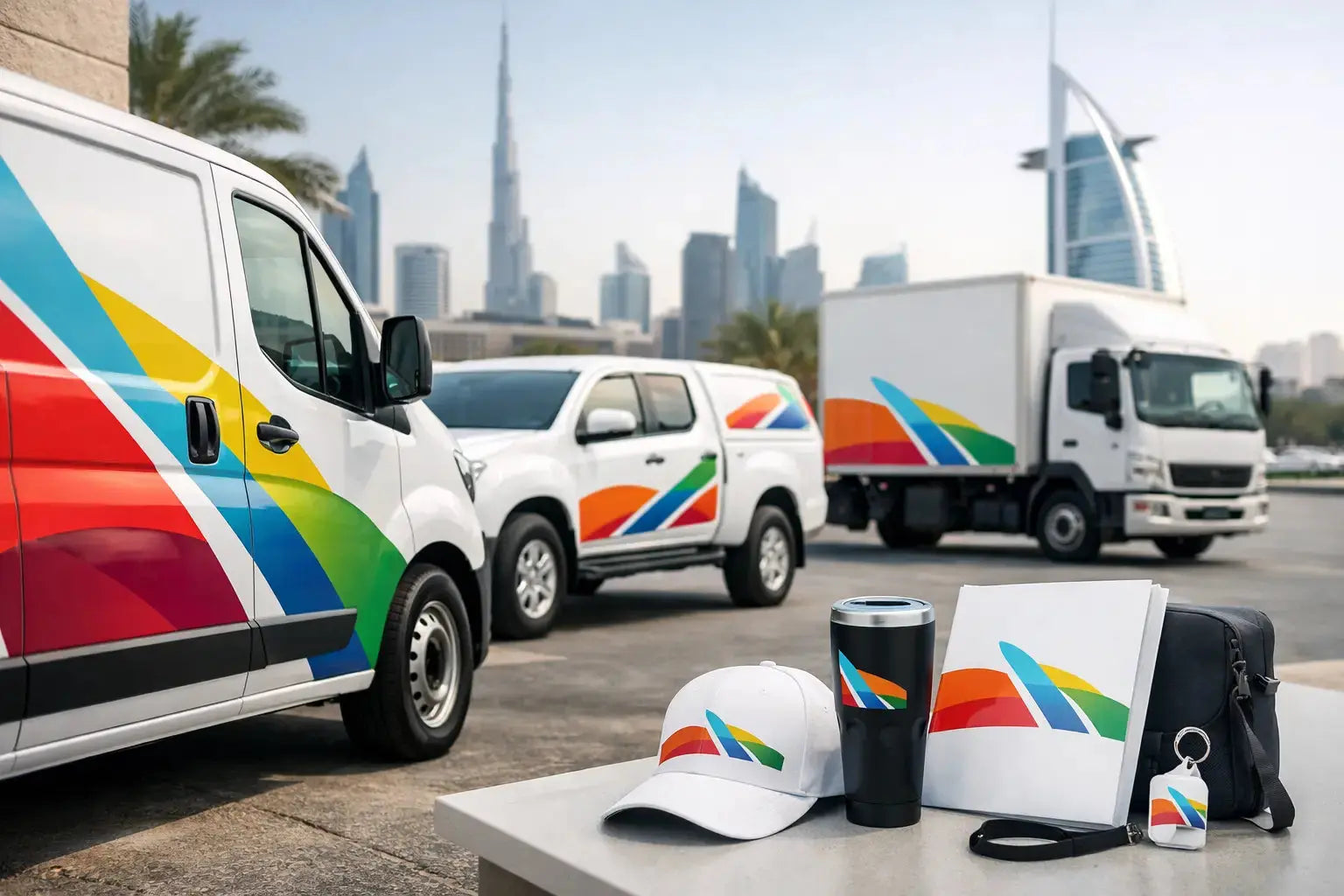
A service vehicle parked outside a client site is more than transportation. It is a visible part of the customer experience, often seen before a representative reaches the door. The strongest fleet branding benefits come from turning those daily journeys into consistent, professional brand exposure across the areas your business already serves.
For businesses with delivery vans, sales vehicles, maintenance trucks, company cars, or large transport fleets, vehicle graphics create repeated visibility without requiring another campaign to be actively managed. The value is not simply putting a logo on a door. It is making every vehicle easy to recognize, credible at a glance, and aligned with the quality customers expect from your business.
The Fleet Branding Benefits That Build Recognition
Fleet branding gives a business a physical presence across its service territory. A well-designed vehicle wrap, partial wrap, or branded decal package can introduce your company to people at traffic lights, in parking areas, outside job sites, and throughout commercial districts. That exposure is especially valuable for businesses that depend on local awareness, repeat service work, or time-sensitive deliveries.
Unlike a single sign at one location, branded vehicles move through multiple neighborhoods and business zones during a normal workday. The audience changes constantly, while the brand presentation stays consistent. For growing companies, this helps establish familiarity before a prospect searches for a supplier or needs a service.
Recognition also affects trust. When a technician, installer, delivery team, or event crew arrives in a clearly branded vehicle, the customer can quickly confirm who is on site. This is useful for residential communities, offices, retail locations, hospitality venues, and controlled-access properties where staff need to identify vendors promptly.
A polished vehicle presence supports the wider brand experience. Customers may first see your vehicle, then visit your website, receive a printed quotation, meet your sales team, or open branded packaging. Using the same logo, colors, typography, and key service message across these touchpoints makes the business easier to remember.
Visibility Is Valuable When the Message Is Clear
A vehicle has limited space and only a few seconds to communicate. The most effective fleet graphics do not try to list every product, service, branch, and social media channel. They prioritize the details that matter most from a distance: the company name, a recognizable logo, a clear service category, and a practical contact method.
For example, a facilities management company may lead with its name and a concise statement of its service. A food distributor may emphasize the product category and delivery identity. A construction supplier may feature the company name, key capability, and phone number. The design should match how customers make decisions in that category.
Legibility matters as much as visual impact. Small text, low-contrast colors, and crowded layouts may look detailed in a design proof but become difficult to read on the road. Large type, clean spacing, and high-contrast graphics generally perform better. A professional branding partner should review the vehicle model, available panel sizes, door handles, windows, body contours, and safety markings before finalizing artwork.
There is also a trade-off between bold coverage and flexibility. A full wrap creates high impact and can transform the vehicle into a strong campaign asset. Partial wraps, vinyl lettering, and logo decals can provide an effective branded look with a more focused application. The right choice depends on fleet size, vehicle condition, brand guidelines, expected vehicle replacement cycles, and the role each vehicle plays.
A More Professional Arrival at Every Job
In service-led sectors, presentation influences confidence. A branded vehicle tells customers that the team arriving at their location is organized and accountable. It can also support staff safety by making company vehicles easier to identify in busy work zones or large venues.
This benefit is particularly relevant when employees visit client sites under your company name. Whether the vehicle carries installers, delivery staff, sales samples, maintenance equipment, or event materials, it represents your standards before any conversation begins. Clean, consistent graphics help create a more dependable first impression.
Fleet branding can also improve internal consistency. When vehicles, uniforms, printed documents, ID materials, packaging, and event displays use the same visual system, employees are operating within a clear brand environment. That consistency makes the company look established without requiring every team member to explain who they are or what they do.
The details need careful planning. Vehicle branding should not obstruct legally required markings, driver visibility, lights, sensors, or safety information. For commercial fleets, practical questions such as wash resistance, outdoor durability, fuel-cap access, sliding-door movement, and graphic placement around panel seams should be addressed before production.
Choosing Fleet Branding for the Vehicle and Use Case
The best material and coverage level depend on the vehicle, operating conditions, and intended lifespan of the branding. A short-term campaign vehicle may need a different solution from a long-term service fleet that operates daily in heat, dust, traffic, and frequent cleaning conditions.
Vinyl lettering is often suitable when the priority is a clean display of the logo, contact details, and essential service message. It is a practical choice for companies that want straightforward identification across several vehicles. Printed decals can add more color, visuals, or campaign-specific messaging while keeping coverage controlled.
Partial wraps use larger printed sections to create stronger visibility on selected areas such as side panels, rear doors, or hoods. They can work well when the vehicle's original color complements the brand palette. Full wraps provide the broadest visual coverage and are appropriate for businesses that want maximum roadside impact or have a distinctive campaign design.
Before approving a specification, procurement and marketing teams should consider these four operational factors:
- Vehicle make, model, year, and condition, since panel dimensions and surface quality affect installation planning.
- Coverage level, including whether the design needs to work across vans, trucks, cars, or specialty vehicles.
- Graphic lifespan and replacement plans, especially if vehicles are leased, frequently rotated, or assigned to temporary campaigns.
- Installation scheduling, so vehicles can return to operations with minimal disruption to customer commitments.
Measuring the Business Impact of Fleet Branding
Fleet branding is often treated as a visibility investment, but it can be measured more deliberately. Start by setting a clear purpose. Is the goal to increase local recognition, make delivery vehicles easier to identify, support a new service launch, or reinforce credibility at client locations? The answer shapes the design and the metrics worth tracking.
Businesses can monitor direct inquiries that mention seeing a vehicle, use a dedicated phone extension or landing-page reference in campaign materials, and ask new customers how they heard about the company. Sales teams can record this information in their customer relationship management process. While not every viewing converts immediately, recurring recognition can contribute to preference when a buyer is ready to act.
Operational feedback is also useful. Site managers may report smoother access for identifiable teams. Customers may comment that it was easier to recognize the delivery or service vehicle. Staff may find that a consistent vehicle appearance supports a more professional interaction. These signals are harder to assign to one number, but they still reflect the practical value of a clear brand presence.
The outcome depends on the business model. A regional logistics company with dozens of vehicles may prioritize broad awareness. A specialist maintenance provider with a smaller fleet may gain more from trust and identification at high-value service calls. A restaurant group may use branded delivery vehicles to reinforce a recognizable food brand in its core delivery zones. Fleet branding works best when it supports the actual route, audience, and sales process of the business.
Keep the Brand Consistent Beyond the Vehicle
Vehicle graphics should not exist in isolation. Use the same approved colors, logo rules, messaging style, and contact details across uniforms, business stationery, product labels, packaging, storefront signage, exhibition displays, and promotional materials. This creates a connected brand experience instead of a vehicle that looks unrelated to the rest of the company.
Printava supports businesses with coordinated printing, signage, uniforms, labels, packaging, and display materials, helping fleet graphics fit into a wider brand rollout. This is useful when a company is opening a new location, launching a service division, preparing for an exhibition, or standardizing materials across several teams.
Before moving forward, inspect one vehicle closely, define the message customers need to see first, and select materials suited to its working environment. A well-planned branded fleet does more than attract attention - it helps every arrival look prepared, recognizable, and ready to represent the business.